
Blog

Your blog category

Blog

BBA Course Subjects List : BBA Career Opportunities

BBA Course Subjects List : BBA Career Opportunities If you wish to obtain a Bachelor of Business Administration (BBA) and are curious about the list of disciplines covered in thebba course subjects list , this guide is for you. You can find brief descriptions of each topic, arranged by semester, here. Additionally, you will understand what each topic entails and how it will aid in your job search. At The Learning Company, we think that when students select a class, they should be aware of what they are getting into. For that reason, we created this simple, experience-based guide to the bba course subjects list. What is the BBA Course? You can learn the fundamentals of business, administration, finance, and leadership with a three-year Bachelor of Business Administration (BBA) degree. It’s great for students who want to become managers or get an MBA in the future.However, before you apply, you should be aware of the subjects you will be studying in thebba course subjects list. Why the BBA Course Subjects List Matters Expectations for the next three years are outlined in the bba course subjects list . It outlines the specifics of what you will learn, including the fundamentals of marketing, finance, HR, management, and leadership. Being aware of the subjects in advance benefits you: Choose your electives wisely for subsequent semesters. Get ready for skill-based learning and projects. Choose a career that interests you, such as human resources, marketing, or finance. BBA Course Subjects List – Semester Wise Let’s review the bba course subjects list. The majority of Indian universities are organized similarly, while there might be a few minor differences. Semester 1 Subjects BBA-101: Fundamentals of Management BBA-102: Organizational Behavior BBA-103: Managerial Economics BBA-104: Accounting and Financial Management BBA-105: Business Law BBA-106: Business Organization and Ethics BBA-00B: Environmental Studies What You’ll Learn: The fundamentals of how businesses operate will be covered in the first semester. You learn how to collaborate with both individuals and groups in courses like Organizational Behavior and Fundamentals of Management. Accounting and financial management teach you how to manage money, while business law teaches you about the legal aspects of running a firm. Semester 2 Subjects BBA-201: Quantitative Techniques for Business BBA-202: Business Communication BBA-203: Human Resource Management BBA-204: Marketing Management BBA-205: Business Environment BBA-206: Fundamentals of Computer BBA-207: Soft Skill Assessment (Presentations/GD/Personality Traits) What You’ll Learn: This semester will teach you how to communicate with others and think critically. Your speaking and writing abilities might be enhanced with the aid of business communication. Marketing management and human resource management teach you how businesses attract and retain customers. Semester 3 Subjects BBA-301: Advertising Management BBA-302: Team Building & Leadership BBA-303: Indian Economy BBA-304: Customer Relationship Management BBA-305: Management Information System BBA-306: Income Tax Law & Practice What You’ll Learn: This section of the BBA course syllabus focuses on teamwork and effective leadership. Team Building & Leadership teaches you how to persuade others to do what you want, and CRM (Customer Relationship Management) teaches you how to interact with clients, which is a crucial marketing skill. Semester 4 Subjects BBA-401: Consumer Behavior BBA-402: Financial Management BBA-403: Production & Operation Management BBA-404: Sales & Distribution Management BBA-405: Research Methodology BBA-406: Entrepreneurship & Small Business Management BBA-407: Computer Oriented Practical & Viva Voice What You’ll Learn: You’ll have the opportunity to apply what you’ve learned in the classroom to real-world situations in Semester 4. Research methodology helps you look at data, which is a skill you need to run a business; financial management teaches you more about how to manage money; and entrepreneurship helps you think like a business owner. Semester 5 Subjects BBA-501: Arithmetic Aptitude BBA-502: Aptitude Reasoning BBA-503: General Business Awareness BBA-504: Business English BBA-505: Elective Paper M/F/1 BBA-506: Elective Paper M/F/2 BBA-507: Summer Training Project Report & Viva-Voice What You’ll Discover: You’ll begin to think more deeply. Having strong thinking and aptitude makes problem solving easier. Through the Summer Training Project, you can experience what it’s like to work for a legitimate company. By enrolling in courses in marketing, human resources, and finance, you can select your major. Semester 6 Subjects BBA-601: Strategic Management & Business Policy BBA-602: Operation Research BBA-603: Fundamentals of E-Commerce BBA-604: Economic and Industrial Law BBA-605: Elective Paper M/F/3 BBA-606: Elective Paper M/F/4 BBA-607: Comprehensive Viva Voice What You’ll Learn: Strategy and modern business operations are the main topics of the last semester of the BBA program. One excellent approach to learn about how businesses operate online is through e-commerce. Strategic management equips you for jobs that need decision-making. Key Skills You’ll Develop Through the BBA Course You will find many useful items after reviewing the entire  bba course subjects list,, including Leadership and communication in business Having the ability to think critically and solve problems Understanding company laws and finances Understanding how to market products and what consumers consider before making a purchase Investigating and determining the meaning of data The way an entrepreneur thinks These skills can help you prepare for college and work, such as earning an MBA or M.Com. Career Opportunities After Completing the BBA Course After completing the BBA degree requirements, you might investigate several business and management roles, including: Marketing Executive HR Coordinator Financial Analyst Operations Executive Business Development Associate E-commerce Manager Entrepreneur You can also go for an MBA for career growth. How The Learning Company Can Assist It can be challenging to decide which institution to attend or what to do with a BBA. The Learning Company can help with that. We offer free career guidance to working individuals and students alike. We can assist you with: Determine whatever field of study—finance, human resources, or marketing—is best for you. View the top BBA and MBA programs offered online in India. Following acceptance, you might receive mentorship, advice, and direction regarding EMI. We think that schools ought to be goal-oriented, transparent, and governed by regulations. The first step in making it evident is this list of the contents of the bba course.

Blog

Importance of Speaking Skills Career Growth

Importance of Speaking Skills Career Growth In today’s fast-paced professional world, being able to communicate well is the key to success. Out of all the ways to communicate, speaking is the one that will have the biggest effect on your job. Understanding how importance of speaking skills Career Growth are for career success can dramatically impact how you go up in your work, whether you are a student or a seasoned professional. I have seen directly how improving one’s speaking skills can boost self-confidence, leadership, and professional success since I have taken part in The Learning Company’s free career counseling classes. What Are Speaking Skills? Speaking abilities are the capacity to express your thoughts, feelings, and ideas clearly and with confidence. Being able to speak English well is not enough; you also need to be able to communicate well with people. People who know how importance of speaking skills Career Growth  knows that speaking in fancy language or accents isn’t necessary. Tone, confidence, and clarity are all important. How well you communicate can have a big impact on your career success. Importance of Speaking Skills Career Growth The importance of speaking skills Career Growth advancement is important in any field. In today’s competitive business world, companies value employees who can start discussions, talk to clients clearly, and present their ideas with confidence. Speaking well is important for success at work for the following reasons: Boosts Your Confidence: When you speak with confidence, you feel brave enough to go to meetings, give presentations, and go to job interviews. Improves Leadership: Good speakers can motivate and lead teams, which makes them great leaders by nature. Offers Opportunities: Employers like applicants who can accurately represent their company. Builds Strong ties: Clear communication makes it easier to keep good work ties. Leads to Promotions: Managers are more likely to notice and promote those who talk well. Even small improvements in your speaking skills might have a big effect on your career. Importance of Speaking Skills for Students Students need to importance of speaking skills Career Growth, which starts in school and lasts for the rest of their life. Why It Matters for Students   Better performance in interviews: Students who can clearly explain ideas during interviews leave a lasting impression. Good communication in conversations, seminars, and presentations helps you do well in school and in college. Networking: Students who can talk to professionals, mentors, and other students can make connections. Getting Ready for Your Future Career: Employers value graduates who can communicate well. The Learning Company offers free career coaching to help students who don’t know where to start slowly improve their communication and job-related abilities. How Speaking Skills Support Professional Success It’s even clearer how  importance of speaking skills Career Growth setting, like Career Growth. You need to be able to communicate clearly with everyone, including coworkers, clients, and managers. Benefits of Strong Speaking Skills   Better presentations: Trust grows when people are clear and confident in their communication. Better Relationships with Clients: You talk to clients in a professional and easy way. Good teamwork means that you can easily give feedback and ideas. Resolving Conflicts: Talking to each other in a calm and clear way can help settle disagreements at work. In short, communication is what makes your ideas work. Easy Ways to Improve Your Speaking Skills You don’t need fancy training to get better at speaking; all you need to do is keep working at it. Here is how you can get started right away: Reading out loud every day will help you speak more clearly and fluently. You can find out what needs to be fixed by recording your voice. Join in on group conversations: Get involved to increase your confidence. Learn from people who are good at speaking: Online, you can watch TED Talks or public speakers. Think about what you’re about to say before you say it: Set up your thoughts so they sound calm and knowledgeable. Every little thing you do every day helps you talk to people better and understand howimportance of speaking skills Career Growth. Professional Growth. Common Speaking Mistakes to Avoid using unnecessary filler words like “like” or “um” and not making eye contact. Remember that connection, not perfection, is what makes a great speech. Role of Speaking Skills in Career Growth After working with a number of professionals, I’ve noticed that those who know howimportance of speaking skills Career Growth are move up the ladder faster than others. Being able to speak well can help you get jobs that you wouldn’t be able to get with just technical skills. It’s one of the best things you can do for your career. The Learning Company: Helping You Grow in Your Career The Learning Company has helped many professionals and students reach their career goals. We offer free career counseling to both students and working adults to help you figure out what you’re good at, how to communicate better, and how to make a career path that fits your skills. Final thoughts People will see you and your potential differently depending on how well you can communicate effectively and with confidence, no matter how much experience you have. Begin now, speak more, practice every day, and keep getting better. Book Free Counseling

Blog

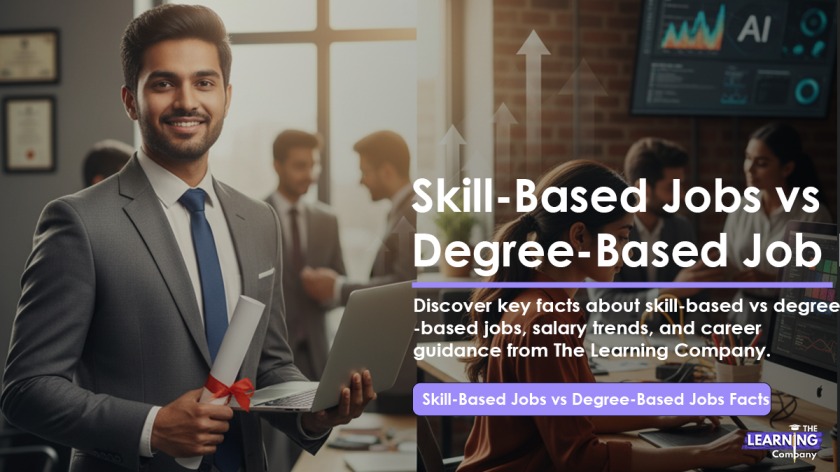
Skill-Based Jobs vs Degree-Based Jobs Facts

5 Interesting Facts About Coding Careers in India In today’s fast-changing job market, a common debate continues — skill-based jobs vs degree-based jobs facts. For years, people believed that earning a degree was the only path to success. But now, things are changing. Employers are shifting their focus from academic qualifications to real-world skills. Let’s explore some interesting facts about skill-based and degree-based jobs, and see which one truly prepares you better for the future. What Are Skill-Based Jobs? Skill-based jobs are roles that value your abilities, practical experience, and expertise over formal education. For example, digital marketing, graphic design, data analytics, web development, and content writing are often considered skill-based careers. These fields reward what you can do, not just what you have studied. If you’re someone who learns by doing or prefers hands-on experience, skill-based jobs can open amazing opportunities. What Are Degree-Based Jobs? Degree-based jobs, on the other hand, rely heavily on your educational qualifications. Professions like doctors, lawyers, engineers, and teachers usually require a university degree or professional certification. In these roles, a structured education ensures that you meet specific industry standards and ethical responsibilities. So, while skill-based jobs focus on performance, degree-based jobs emphasize theoretical knowledge and formal learning. Skill-Based Jobs vs Degree-Based Jobs Facts You Should Know Here are some key skill-based jobs vs degree-based jobs facts that every student and working professional should understand: Employers are shifting priorities – Studies show that more than 70% of employers now prioritize skills over degrees when hiring. Skill-based hiring saves time – Companies find it easier to assess a candidate’s skills with practical tests rather than relying on paper qualifications. Skill-based professionals upskill faster – People who focus on skills often stay updated with the latest tools and technologies. Degrees still matter in some sectors – Jobs in medicine, law, or academia still require formal degrees and certifications. Freelance opportunities favor skills – The gig economy runs on skills. Platforms like Upwork and Fiverr reward practical expertise over formal education. These facts make one thing clear — skills are becoming the new currency in the job market.   Why Skill-Based Jobs Are Growing Fast The rise of technology, automation, and online learning has changed everything. Today, even someone without a degree can learn coding, digital marketing, or video editing online and start earning. Skill-based jobs are more flexible, future-ready, and allow you to grow quickly by learning new things. Plus, many industries like IT, design, and sales are now hiring based on skill tests, portfolios, or real-world project experience. Why Degree-Based Jobs Still Have Value Even though skill-based jobs are booming, degree-based careers are still valuable in fields that need in-depth theoretical understanding and regulated training. For instance, an engineer’s degree ensures they understand safety standards, while a doctor’s degree ensures patient safety and ethical medical practice. So, degree-based jobs offer credibility and structure, which is essential in certain professions. How to Start Your Coding Career in India If you’re inspired by these 5 interesting facts about coding careers in India, you might be wondering where to start.Here’s a simple roadmap: Learn the Basics – Start with beginner-friendly languages like Python, HTML, and JavaScript. Build Projects – Apply what you learn by creating small apps, websites, or automation scripts. Join Communities – Be part of coding groups or online forums where you can learn from others. Keep Learning – Technology changes fast; stay updated with new trends. Seek Guidance – Platforms like The Learning Company offer free career counselling to help you choose the right coding course or specialization for your goals. Remember, coding is not about being a genius — it’s about being curious and consistent. Skill-Based Jobs vs Degree-Based Jobs Salary Comparison Salaries can vary widely depending on the field, experience, and skill level. Category Skill-Based Jobs (Average Annual Salary) Degree-Based Jobs (Average Annual Salary) Entry-Level ₹3 – ₹6 LPA ₹4 – ₹8 LPA Mid-Level ₹6 – ₹15 LPA ₹8 – ₹18 LPA Senior-Level ₹15 – ₹30 LPA ₹20 – ₹40 LPA As you can see, both paths can lead to great financial success — the difference lies in how you grow. Skill-based professionals often rise faster with performance, while degree-based professionals climb steadily with experience. The Role of Online Learning and Certifications One major trend reshaping this debate is online education. Platforms and universities now offer certified skill-based courses in fields like management, analytics, and software development. For example, someone can now do an online MBA or learn AI tools without leaving their job — proving that learning never stops. If you want to grow your career smartly, combining a degree with strong skills is the best choice. How to Choose Between Skill-Based and Degree-Based Jobs Here’s a simple way to decide which path suits you better: Choose skill-based jobs if you enjoy practical learning, creativity, or freelancing. Choose degree-based jobs if your dream career requires licenses, structured education, or specialized knowledge. Or better yet, blend both — earn a degree and keep learning new skills along the way. Remember, the best career path is the one that fits your strengths and goals. Real-Life Example: How Skills Can Beat Degrees Take the example of someone who becomes a successful YouTuber, app developer, or digital marketer without a degree. Their success comes from consistent learning and practice. In contrast, many degree holders struggle to find jobs because they lack practical exposure. This shows that in today’s world, what matters most is your ability to perform, not just your qualification. The Learning Company’s Advice for Students & Professionals Choosing between skill-based jobs vs degree-based jobs can be confusing. That’s where The Learning Company can help. The Learning Company offers free career counselling for students and working professionals to help them choose the right career path — whether that’s skill-oriented, degree-oriented, or a mix of both. They guide you on the best online programs, skill development courses, and university options — making career planning simple and stress-free. Final Thoughts on Skill-Based Jobs vs Degree-Based Jobs

Blog

5 Interesting Facts About Coding Careers in India

5 Interesting Facts About Coding Careers in India The world of coding is full of opportunities, creativity, and constant learning. Whether you are a student or a working professional looking for a career change, coding has become one of the most rewarding paths to explore.In this blog, we’ll uncover 5 interesting facts about coding careers in India that will help you understand why this field is booming and how you can be a part of it. 1. Coding Careers in India Are Growing Faster Than Ever One of the most interesting facts about coding careers in India is their unbelievable growth rate. India has become a global hub for IT and software development.Every year, thousands of new startups, tech companies, and digital agencies look for skilled coders who can create innovative apps, websites, and systems. According to industry reports, India’s IT sector is expected to reach $245 billion in 2025, creating millions of new coding jobs. From software engineers to app developers and data analysts — coding is no longer limited to computer science graduates only. Even non-tech professionals are learning coding to upgrade their careers. If you’re someone who loves problem-solving and logical thinking, then this growing industry could be the perfect match for you. 2. Coders in India Earn Competitive Salaries Another interesting fact about coding careers in India is the attractive salary range. Even beginners in this field can earn more than freshers in many other industries. For example: Entry-level coders (0–2 years experience) can earn between ₹4 LPA to ₹8 LPA. Mid-level professionals (3–6 years experience) often earn ₹10 LPA to ₹18 LPA. Senior developers or tech leads can make ₹20 LPA or more, depending on skills and company size. What’s even more exciting is that coding allows you to work remotely for international companies, earning in dollars while living in India. If you’re unsure which programming language or tech role suits you, The Learning Company offers free career counselling for working professionals, helping you choose the right career path based on your goals and skills. 3. You Don’t Need a Computer Science Degree to Become a Coder Here’s one of the most surprising facts about coding careers in India — you don’t always need a computer science degree to start coding.Many successful developers and freelancers come from fields like commerce, arts, or mechanical engineering. What matters most is your skillset, consistency, and real-world practice. Today, there are many online platforms where you can learn coding from scratch — courses on Python, JavaScript, HTML, CSS, and Data Science are available at your fingertips. Companies now focus more on skills and project experience rather than just degrees. So if you’re motivated and ready to learn, a coding career is always within your reach. 4. India Is Becoming a Global Coding Powerhouse India is not just a place where coding jobs are growing — it’s also becoming a global talent supplier for tech companies worldwide.From Silicon Valley startups to European software firms, Indian coders are in high demand because of their problem-solving ability, adaptability, and strong technical base. Some of the world’s most successful CEOs, like Sundar Pichai (Google) and Satya Nadella (Microsoft), started their journeys with coding in India. Their stories continue to inspire millions of young Indians to take up this field. This clearly shows that coding isn’t just a profession anymore — it’s a global skill that opens doors to international opportunities. 5. Coding Careers Offer Endless Growth and Creativity One more interesting fact about coding careers in India is that this field keeps evolving. New technologies like Artificial Intelligence (AI), Machine Learning, Blockchain, and Cybersecurity are creating brand-new roles that didn’t even exist a few years ago. Coding isn’t just about writing lines of code — it’s about solving real-world problems, creating digital products, and improving how people live and work.From designing mobile apps to building AI-powered chatbots, coders get to use both logic and creativity every single day. That’s why so many young Indians are choosing coding as their career — because it’s future-proof, flexible, and fulfilling. How to Start Your Coding Career in India If you’re inspired by these 5 interesting facts about coding careers in India, you might be wondering where to start.Here’s a simple roadmap: Learn the Basics – Start with beginner-friendly languages like Python, HTML, and JavaScript. Build Projects – Apply what you learn by creating small apps, websites, or automation scripts. Join Communities – Be part of coding groups or online forums where you can learn from others. Keep Learning – Technology changes fast; stay updated with new trends. Seek Guidance – Platforms like The Learning Company offer free career counselling to help you choose the right coding course or specialization for your goals. Remember, coding is not about being a genius — it’s about being curious and consistent. Final Thoughts: Why Coding Is the Future of Work in India As India continues to lead the digital transformation wave, coding will remain one of the most in-demand skills in the coming decade.From tech giants to government projects, coders play a vital role in shaping the country’s digital future. The 5 interesting facts about coding careers in India show us one thing clearly — coding is not just a career choice anymore, it’s a gateway to innovation, financial stability, and creative freedom. If you’re ready to begin your journey, start small, stay patient, and keep learning. And if you ever feel lost, remember that The Learning Company is here to help you with free career counselling for working professionals — guiding you toward the right coding path and a brighter future. Book Free Counseling

Blog

Salary Difference Between Online and Offline MBA

Salary Difference Between Online and Offline MBA MBA has become one of the most popular choices for students and professionals looking to grow in their careers. But one question that often comes up is — what is the salary difference between online and offline MBA? People want to know which MBA mode gives better returns on investment. In this blog, we’ll break down the salary gap between online and offline MBAs in simple English — so you can make a clear and confident choice for your future. 1. Online MBA vs Offline MBA: The Basic Difference Before talking about salaries, let’s understand what separates an online MBA from an offline MBA. Online MBA: Classes, exams, and assignments are completed entirely online. It’s flexible and ideal for working professionals. Offline MBA: Traditional classroom-based program with in-person lectures and campus life experience. Both aim to build leadership and business management skills — but their salary outcomes can differ slightly depending on your goals and background. 2. Factors That Influence MBA Salary Whether you choose an online or offline MBA, these factors play a big role in determining your salary after graduation: University Reputation: Graduates from reputed institutions like IIMs, Amity, or Manipal tend to earn higher packages. Work Experience: Professionals with experience often earn more after an online MBA. Specialization: Fields like Marketing, Finance, Data Analytics, and HR come with different pay ranges. Industry Type: Industries like IT, Consulting, and Finance generally offer the highest MBA salaries. 3. Average Salary After Offline MBA Offline MBA students usually benefit from campus placements, which makes their initial salary packages higher. Tier 1 Colleges (IIMs, ISB, XLRI): ₹15 LPA – ₹30 LPA Tier 2 Colleges: ₹6 LPA – ₹12 LPA Tier 3 Colleges: ₹4 LPA – ₹6 LPA The biggest strength of offline MBA is networking and placement exposure, which helps in securing high-paying roles early in your career. 4. Average Salary After Online MBA Now let’s look at the salary after online MBA.Earlier, online MBAs were not taken seriously by employers, but now things have changed. Top companies are hiring online MBA graduates — especially those who already have work experience. Fresh Graduates (No Experience): ₹4 LPA – ₹6 LPA Working Professionals (2–5 Years): ₹7 LPA – ₹15 LPA Senior Professionals (5+ Years): ₹15 LPA – ₹25 LPA The biggest advantage of an online MBA is flexibility — you can study while working and apply what you learn directly to your job, resulting in faster salary growth. 5. Salary Difference Between Online and Offline MBA So, what’s the real salary difference between online and offline MBA?For freshers, offline MBA graduates usually earn slightly more due to campus placements. But for working professionals, online MBA can be equally — or sometimes even more — rewarding. Salary Difference: Online vs Offline MBA Salary Difference: Online vs Offline MBA

Blog

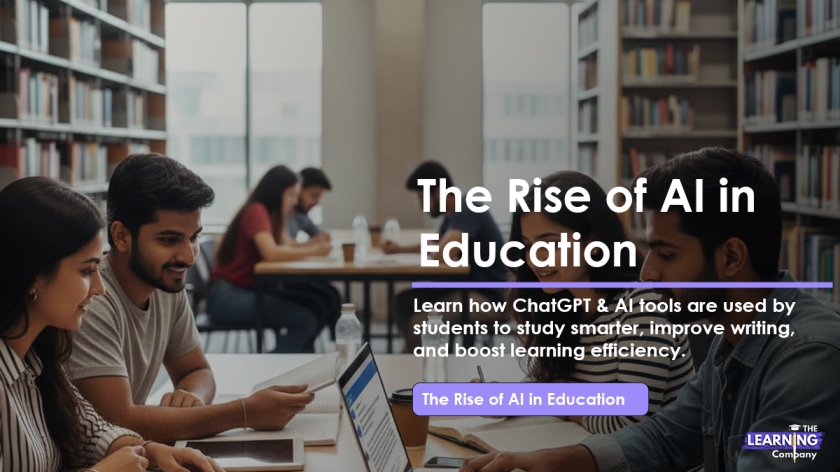
How ChatGPT & AI Tools Are Used by Students in 2025

How ChatGPT & AI Tools Are Used by Students in 2025 In the last few years, technology has completely changed the way students study and complete assignments. Among all innovations, ChatGPT and AI tools have become the most popular companions for learners. From solving doubts to writing essays, students are now using AI every single day. In this blog, we’ll explore how ChatGPT & AI tools are used by students, their real benefits, areas to be careful about, and how they are shaping the future of learning. The content you’ll read here is based on experience and expert understanding, written in simple, easy-to-read English. 1. What Is ChatGPT and Why Are Students Using It? ChatGPT is an AI-powered language model developed by OpenAI that can understand questions and generate natural, human-like responses. For students, it acts like a personal tutor available 24/7. Students use ChatGPT to: Understand difficult topics in simple language Write essays, reports, and assignments Prepare for exams and tests Improve grammar and vocabulary Generate project ideas and creative content ChatGPT is more than just a chatbot. It is a smart digital assistant that makes studying faster, easier, and more engaging. 2. How ChatGPT & AI Tools Are Used by Students in Daily Life Here’s how students are using AI in real academic life. a. Homework Help and Assignments AI tools like ChatGPT, Grammarly, and QuillBot help students write faster and better. They can correct grammar, rephrase sentences, and even explain concepts clearly. b. Research and Information Gathering Instead of visiting multiple websites, students now use AI to collect summarized information. ChatGPT can explain historical facts, theories, or case studies instantly. c. Exam Preparation and Revision AI tools help in creating notes, quizzes, and practice tests. Students can ask ChatGPT to explain any topic in simple words, saving both time and effort. d. Writing and Creativity From essays to story ideas, AI tools help improve creativity. Students can use ChatGPT to brainstorm, rewrite, and organize their thoughts. e. Language Learning Students from non-English backgrounds use ChatGPT to practice English, learn new words, and improve pronunciation. 3. Popular AI Tools Students Use in 2025 ChatGPT – for research, writing, and doubt-solving Grammarly – for grammar correction and writing improvement QuillBot – for rephrasing and summarizing Notion AI – for note-taking and task organization Google Bard or Gemini – for factual research Socratic by Google – for solving academic problems Canva Magic Write – for creative visuals and design help Each of these tools helps students save time, stay organized, and boost learning quality. 4. Benefits of Using ChatGPT & AI Tools Saves time on research and writing Makes complex topics easier to understand Improves writing quality and confidence Supports self-paced, independent learning Encourages creativity and problem-solving AI tools help students study smarter, not harder. 5. Where Students Should Be Careful While Using AI While AI can make learning easier, it also has risks if used carelessly. Don’t copy everything directly from AI-generated text   Always verify facts and data   Keep your originality in assignments   Use AI to learn, not to avoid studying   Respect ethical boundaries of plagiarism The smartest students use AI as a support system, not as a shortcut. 6. How Teachers and Institutions Use AI Teachers and schools are also adapting to AI tools. Many educators use ChatGPT and other systems to: Create study materials and quizzes Personalize lesson plans Offer instant feedback to students Automate grading and assessment This collaboration between teachers and technology is making classrooms more efficient and interactive. 7. Real-Life Examples of Students Using ChatGPT A college student uses ChatGPT to prepare for MBA entrance exams and practice aptitude tests. A school student uses AI to summarize long chapters before exams. A working professional studying online uses ChatGPT to manage study schedules and create reports after work. These examples show how ChatGPT & AI tools are used by students in different ways — from schools to universities to online courses. 8. The Future of Learning with AI AI will continue to personalize education. In the future, every student will have their own AI-based study assistant that tracks progress and suggests learning paths. AI-driven platforms will make learning more interactive, allowing students to study at their own speed and focus on areas where they need the most help. 9. How The Learning Company Supports AI-Driven Learning The Learning Company understands how AI is changing the education system. It helps students and working professionals select the right online programs and offers free career counselling to help them plan better. The team encourages learners to use AI tools wisely — not just to complete tasks but to build real skills, confidence, and clarity for future careers. If you’re a student or a working professional looking to make better study decisions, The Learning Company is always ready to guide you with expert advice and long-term support. 10. Final Thoughts AI has become a powerful part of modern education. Understanding how ChatGPT & AI tools are used by students can help you stay ahead, save time, and learn more effectively. But remember — AI can guide you, not replace your effort. Real learning comes from curiosity, creativity, and consistent hard work. Use ChatGPT and other AI tools as your learning partners, and let them help you unlock your true potential. Book Free Counseling

Blog

Time Management Facts for Online Learners

Time Management Facts for Online Learners Online learning has become one of the most convenient ways to study today. It allows you to learn new skills, complete a degree, or upgrade your career from the comfort of your home. But there’s one thing that makes or breaks your success — time management. In this blog, we’ll explore practical and proven time management facts for online learners that can help you stay focused, productive, and stress-free. Why Time Management Matters in Online Learning Online courses give you flexibility, but without proper time control, that same flexibility can cause delay and burnout. One important time management fact for online learners is that most students fail to complete their online course not because of difficulty, but because they don’t manage time effectively. When you plan your schedule, you: Complete lessons on time Stay more organized Avoid last-minute panic Maintain balance between work, study, and personal life In short, managing time smartly helps you get the best out of online education. Fact 1: Daily Goals Build Consistency One of the best time management facts for online learners is that setting small daily goals keeps you consistent. Instead of planning to finish an entire module in one go, break it into daily targets. For example, say, “I’ll watch one lecture and revise notes today.” These small tasks build progress every day. Pro Tip: Use a planner or mobile calendar to note your daily tasks. Consistency always beats long, random study hours. Fact 2: Short Study Sessions Are More Effective Many students believe longer hours mean better results, but that’s not true. Research shows the brain focuses best in short, structured sessions. The Pomodoro technique — 25 minutes of study followed by a 5-minute break — improves focus and memory. So, instead of studying for four hours continuously, try four Pomodoro cycles. It’s one of the simplest yet powerful time management facts for online learners. Fact 3: Multitasking Reduces Efficiency When you study while checking messages or scrolling social media, your brain keeps switching focus. That’s why multitasking can reduce productivity by up to 40%. A proven time management fact for online learners is that single-tasking gives better results. Keep your phone away, close extra tabs, and focus on one subject at a time. You’ll learn faster and retain information longer. Fact 4: Morning Study Hours Improve Retention Your energy and focus are highest after a good night’s sleep. Early morning study hours are great for tasks that require attention and deep understanding. However, not everyone is a morning person. So, another time management fact for online learners is to identify your personal peak hours — morning, afternoon, or night — and schedule your toughest lessons then. Fact 5: Divide Big Tasks into Small Steps Large assignments or projects can feel stressful. A helpful time management fact for online learners is to break complex tasks into smaller parts. Example: Day 1 – Research Day 2 – Write introduction Day 3 – Edit and proofread Completing small milestones gives a sense of progress and keeps motivation high. Fact 6: Breaks Boost Productivity Working non-stop might sound productive, but it’s not. Your brain needs small breaks to recharge. One of the most overlooked time management facts for online learners is that short breaks every hour increase focus and creativity. Stretch, walk, drink water — even five minutes can refresh your mind. Fact 7: Time Tracking Increases Awareness If you often feel like the day just disappears, start tracking your time. Apps like Toggl, Clockify, or even a simple notebook can show how much time you actually spend studying versus scrolling. This simple habit can help you identify where your hours are going. Awareness is the first step to improvement — a golden time management fact for online learners. Fact 8: Set Boundaries and a Study Zone Online learners often face distractions — family noise, phone calls, or household chores. To study effectively, you must set boundaries. Tell your family or roommates your study hours. Create a quiet corner or desk for classes. A dedicated learning space signals your brain that it’s “study time.” This is one of the most practical time management facts for online learners for those who study from home. Fact 9: Consistency Beats Intensity It’s better to study one hour daily than to study ten hours on Sunday. Consistency helps build habits and long-term memory. This is a proven time management fact for online learners — steady, daily effort works far better than occasional intense sessions. Even 30 focused minutes daily can help you complete your course smoothly. Fact 10: Self-Discipline is the Real Key Motivation can fade, but discipline keeps you going. Successful online learners don’t rely on mood — they rely on habit. Another strong time management fact for online learners is that having a fixed routine helps you stay committed. Make a schedule and stick to it even when you don’t feel like studying. Discipline today becomes success tomorrow. Bonus Tip: Use Smart Tools to Save Time There are many tools that can help you stay on track: Google Calendar – Schedule classes and reminders Notion / Trello – Organize notes and to-do lists Forest App – Stay focused by avoiding distractions Evernote – Collect and manage study material These tools make time management easier and more structured. How The Learning Company Helps Online Learners If you’re a student or working professional managing online studies, guidance can make a huge difference. The Learning Company helps learners plan their education journey effectively. They provide free career counselling for working professionals, helping you choose the right course, set learning goals, and manage time better. Their experts understand the challenges of online learning and guide you toward long-term career success. Final Thoughts on Time Management Facts for Online Learners Online learning gives you flexibility and opportunity — but only if you use your time wisely. These time management facts for online learners are simple yet powerful. They remind us that success is not about

Blog

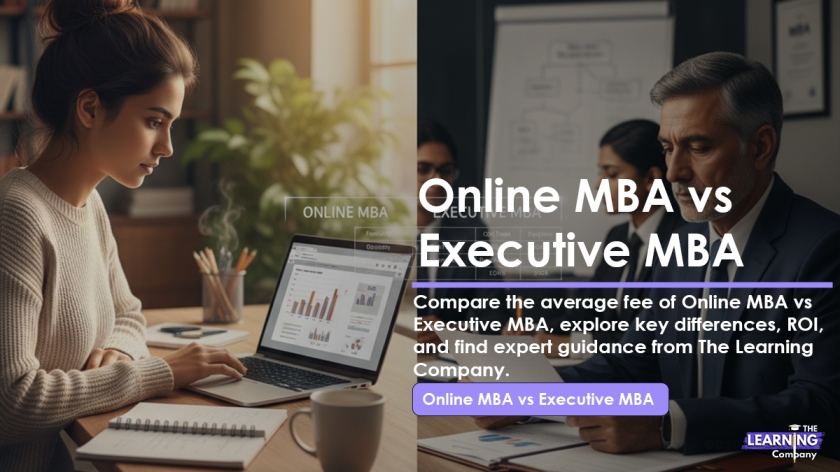
Average Fee Comparison – Online MBA vs Executive MBA

Average Fee Comparison – Online MBA vs Executive MBA If you are planning to upgrade your career with an MBA but can’t decide between an Online MBA and an Executive MBA, you are not alone. Thousands of working professionals face the same confusion — which one is better, and more importantly, which one fits my budget? In this blog, we’ll explore the average fee comparison – Online MBA vs Executive MBA, course details, career outcomes, and other practical factors that help you make a smart decision. Understanding the Difference Between Online MBA and Executive MBA Before we jump into the average fee comparison – Online MBA vs Executive MBA, it’s important to understand how these two programs differ. Online MBA is designed for fresh graduates and working professionals who want flexibility. It allows you to learn from anywhere, at your own pace. Executive MBA (EMBA) is made for mid-level or senior professionals who already have several years of work experience and want to move into leadership roles. While both programs help you grow in your career, their structure, audience, and cost vary a lot — and that’s what we’ll compare next. Average Fee Comparison – Online MBA vs Executive MBA in India When we talk about the average fee comparison – Online MBA vs Executive MBA, the difference is quite significant. MBA Programs Table Program Type Average Fee Range (India) Duration Ideal For Online MBA ₹1,50,000 – ₹3,50,000 2 Years Fresh Graduates, Early Professionals Executive MBA ₹8,00,000 – ₹25,00,000 1–1.5 Years Mid/Senior Working Professionals As you can see, Executive MBA programs are almost 3 to 7 times more expensive than most Online MBA programs. This fee difference exists mainly because Executive MBAs often include on-campus sessions, global exposure, leadership modules, and networking events, while Online MBAs are conducted digitally with flexible schedules. Why Online MBA is More Affordable The main reason an Online MBA costs less is its digital delivery model. There’s no need for physical classrooms, accommodation, or travel — which cuts operational costs. Plus, universities can offer the same quality of education using LMS (Learning Management Systems) and virtual classrooms. Some reputed universities offering affordable Online MBAs in India include: Amity University Online Manipal University Online Sikkim Manipal University Shoolini University Most of these programs are UGC-approved, making them credible for both private and government jobs. Why Executive MBA Costs More In contrast, an Executive MBA is often offered by top institutions like IIMs, ISB, XLRI, or NMIMS, which focus on strategic leadership and industry immersion. Key factors that increase the cost include: International exposure programs and campus residencies Networking opportunities with CXOs and global leaders Specialized leadership and strategy modules Premium faculty and industry mentors So, when you pay a higher fee for an Executive MBA, you’re not just paying for education — you’re paying for experience, exposure, and elite networking. Course Structure: Online MBA vs Executive MBA Course Structure: Online MBA vs Executive MBA Feature Online MBA Executive MBA Mode of Learning 100% Online Hybrid (Online + Campus) Eligibility Graduate from any stream Graduate + 3–10 years of experience Learning Flexibility High Moderate Target Audience Freshers and Early Professionals Senior Managers and Executives Career Goal Skill Enhancement and Career Growth Leadership and Strategy Roles ROI: Which MBA Offers Better Value for Money? While the Executive MBA is expensive, it often offers faster career progression and higher salary hikes — especially for professionals already in managerial roles. However, for someone just starting or in the early stage of their career, an Online MBA offers excellent ROI. You can keep your job, avoid relocation, and still earn a recognized MBA degree — all at a much lower cost. So, when doing an average fee comparison – Online MBA vs Executive MBA, don’t just look at the number. Think about your career stage, financial comfort, and long-term goals. Career Outcomes After Each MBA Type After Online MBA: Roles like Marketing Executive, Financial Analyst, Business Analyst, or HR Manager Average salary: ₹5–12 LPA depending on experience and university Best for those looking to switch or grow within their current domain After Executive MBA: Roles like Senior Manager, Business Consultant, or Director-level positions Average salary: ₹15–35 LPA or higher Best for those aiming for senior leadership or C-suite roles Choosing the Right MBA for You If you are a working professional wondering which one suits you, here’s a quick tip: Go for an Online MBA if you want to balance work and study, save on costs, and upskill gradually. Choose an Executive MBA if you already have strong professional experience and want to step into strategic or leadership roles. How The Learning Company Helps You Choose the Right MBA Selecting between an Online MBA and an Executive MBA can be confusing — especially when fees and eligibility differ so much. That’s where The Learning Company comes in. At The Learning Company, you get free career counselling for working professionals, helping you understand: Which MBA format suits your career goals How to compare programs, universities, and fees Guidance on EMI options, scholarships, and post-admission support Their counsellors help you make an informed choice — so your investment in education pays off. Final Thoughts: Average Fee Comparison – Online MBA vs Executive MBA When comparing the average fee comparison – Online MBA vs Executive MBA, remember this: Online MBAs are budget-friendly, flexible, and ideal for early professionals. Executive MBAs are premium programs meant for those ready to take on top leadership roles. Your decision should depend on your career stage, budget, and future goals — not just the fee. Both programs can transform your career — the key is choosing the one that matches your journey. Book Free Counseling

Blog

7 Myths About Online MBA You Still Believe

7 Myths About Online MBA You Still Believe If you’re thinking about pursuing an Online MBA, chances are you’ve heard a few myths about it. From doubts about credibility to confusion about job opportunities — there are plenty of misconceptions floating around. But let’s set the record straight. In this guide, we’ll uncover the 7 Myths About Online MBA You Still Believe and show you why an online MBA can be just as valuable as a traditional one — or even better for working professionals. At The Learning Company, we regularly guide students and working professionals through online programs and help them make the right career decisions. So, consider this your friendly myth-busting session from people who truly understand how online education works. Myth 1: Online MBA Has No Value Compared to Regular MBA This is one of the most common myths about online MBAs. The truth? Top universities now offer UGC-approved and globally recognized Online MBA programs that hold the same academic weight as their on-campus counterparts. Employers today value skills and knowledge over the mode of study. In fact, online MBAs teach you how to manage your time, stay self-disciplined, and use technology effectively — all qualities employers love. So no, your online MBA doesn’t come with a “less valuable” tag. Myth 2: You Won’t Get Good Jobs After an Online MBA Another major myth people still believe is that online MBA graduates don’t get good jobs. Let’s be honest — your career growth depends on your skills, networking, and how you apply what you learn, not just the mode of study. Many online MBA students work full-time while studying, which gives them a real-world edge. By the time they complete the program, they have both education and experience, which helps them move faster in their careers. If you’re confused about which specialization can help you grow, The Learning Company offers free career counselling for working professionals — so you can plan your MBA journey smartly. Myth 3: Online MBA Is Only for People Who Can’t Get Into Regular Colleges This one couldn’t be further from the truth. Most students who choose an online MBA are working professionals who already have a career but want to move up the ladder without quitting their job. Top universities like Amity, Manipal, and Symbiosis have launched online MBA programs specifically for such learners. These programs are flexible, interactive, and designed to fit your schedule — not the other way around. So, it’s not about “getting in” somewhere. It’s about choosing what fits your lifestyle and career goals best. Myth 4: Online MBA Means No Networking Opportunities Many people believe that an online MBA is an isolated experience — but that’s another big myth. In reality, today’s online MBA platforms have virtual classrooms, peer discussions, live sessions, and alumni communities. You get to interact with people from different industries and countries — something even regular MBA programs may not offer. These connections can open doors to job opportunities, collaborations, and global exposure. So don’t underestimate the networking power of your online classroom! Myth 5: Online MBA Is Easier and Less Challenging Some people assume that an online MBA is an “easy version” of a regular MBA. In truth, it’s quite the opposite. Online MBA programs require strong self-discipline, consistency, and time management. You must balance your work, personal life, and studies — which makes it challenging and rewarding at the same time. Most online MBAs include live classes, case studies, projects, and exams that test your real-world business understanding. So yes, it’s flexible, but definitely not “easy.” Myth 6: Employers Don’t Respect Online MBA Degrees Maybe this was true a decade ago, but not anymore. With digital transformation everywhere, even Fortune 500 companies are hiring professionals with online degrees. Employers care about your skills, leadership qualities, and performance — not where you studied from. Many HR heads now believe online education shows that you’re independent, adaptable, and committed to growth. And when your degree is from a recognized university, it holds the same respect as any full-time MBA. Myth 7: Online MBA Doesn’t Offer Placement Support Another myth about online MBAs is that there’s no placement or career support. Top universities and platforms now provide career guidance, placement assistance, and resume workshops even for online students. Plus, if you’re unsure about your post-MBA goals or career path, The Learning Company can help you with free career counselling, course comparison, and personalized guidance. They help you choose the right specialization, understand salary expectations, and connect with top online universities in India. So yes, online MBA students get professional career support — sometimes even better than traditional ones. Why You Shouldn’t Believe These 7 Myths About Online MBA Now that we’ve busted the 7 Myths About Online MBA You Still Believe, it’s clear that online learning is not just a backup plan — it’s the future of education. Online MBAs are affordable, flexible, and industry-relevant. They let you learn from top faculty, access case studies, and gain practical knowledge — all without leaving your job. Whether you’re aiming for a promotion, career change, or higher salary, an online MBA can open new doors — if you take it seriously. Final Thoughts Education has evolved, and so should your mindset. Believing these old myths might stop you from taking a step that could transform your career. If you’re still unsure which online MBA fits your goals or budget, reach out to The Learning Company. They provide free career counselling for working professionals and help you compare online programs from top universities — so you can make the best decision for your future. Remember, it’s not about where you study — it’s about what you learn and how you use it. Don’t let myths hold you back. Your online MBA could be the smartest investment you ever make. Book Free Counseling

Blog

Which MBA Specialization Has the Highest Salary in India

Trending Tech Courses 2025: Complete Guide for Learners and Professionals Choosing the right MBA specialization can truly shape your career and income for years to come. With so many MBA options available today, one of the most common questions every student asks is — “Which MBA specialization has the highest salary in India?” If you’re planning to pursue an MBA or upgrade your career with an online MBA, understanding which specialization pays the most is crucial. In this blog, we’ll explore the top-paying MBA specializations in India, average salary packages, and which one suits your interests and career goals best. Why MBA Specialization Matters Your MBA specialization decides not only what you study but also which career path you’ll follow after graduation. Whether you aim to become a financial analyst, marketing strategist, HR leader, or business consultant, the specialization you choose plays a huge role in your future salary and growth. Many students make the mistake of choosing a specialization just because it’s “trending.” But the smart way is to understand which fields offer higher salary potential and also match your skills. Top-Paying MBA Specializations in India Let’s explore which MBA specialization has the highest salary in India and what kind of roles each one offers. 1. MBA in Business Analytics – Data is the New Gold In today’s digital world, businesses depend on data to make smart decisions. That’s why MBA in Business Analytics has become one of the highest-paying MBA specializations in India. Average Salary: ₹10–20 LPA (can go even higher in top companies) Top Job Roles: Business Analyst Data Scientist Analytics Manager Product Strategist Why It Pays Well: Companies are ready to pay high packages to professionals who can analyze data and improve profits. From tech startups to big MNCs, analytics experts are in huge demand. 2. MBA in Finance – The Evergreen High-Salary Choice When it comes to which MBA specialization has the highest salary in India, finance always tops the chart. Finance professionals are needed in every business — from banks to investment firms. Average Salary: ₹8–25 LPA (depends on your role and experience) Top Job Roles: Investment Banker Financial Analyst Portfolio Manager Risk Manager Why It Pays Well: Finance specialists handle large amounts of money, manage risks, and guide major financial decisions — that’s why companies reward them with high pay and bonuses. 3. MBA in Marketing – Creativity That Pays Marketing professionals are the backbone of business growth. An MBA in Marketing helps you master market research, branding, digital marketing, and sales strategies. Average Salary: ₹7–18 LPA Top Job Roles: Brand Manager Digital Marketing Manager Product Marketing Specialist Sales Director Why It Pays Well: In today’s digital world, those who can sell ideas, build brands, and drive growth are valued highly by every organization. 4. MBA in International Business – For Global Career Growth If you dream of working abroad or managing global clients, MBA in International Business is one of the best options. It’s also among the highest-paying MBA specializations in India for those in multinational corporations. Average Salary: ₹9–20 LPA Top Job Roles: Global Marketing Manager Export-Import Manager International Operations Manager Business Development Executive Why It Pays Well: You handle international markets, global strategies, and cross-border trade — all of which come with premium compensation. 5. MBA in Human Resource Management – For People-Centric Leaders While HR may not sound like the top-paying field, senior HR professionals earn excellent packages in large organizations. Average Salary: ₹6–15 LPA Top Job Roles: HR Manager Talent Acquisition Head Learning & Development Manager Compensation Manager Why It Pays Well: As companies focus more on employee wellbeing and culture, HR professionals with leadership and analytics skills are earning big rewards. 6. MBA in Operations Management – Managing Business Efficiency If you like problem-solving and process improvement, this specialization is perfect. MBA in Operations Management focuses on production, supply chain, logistics, and quality control. Average Salary: ₹7–16 LPA Top Job Roles: Supply Chain Manager Operations Head Procurement Manager Logistics Analyst Why It Pays Well: Efficient operations save companies millions. Experts who can reduce costs and improve efficiency are highly valued. Which MBA Specialization Has the Highest Salary in India – Final Verdict So, if we talk purely about which MBA specialization has the highest salary in India, Finance and Business Analytics take the lead. But remember — salary isn’t the only factor. The best MBA specialization is the one that matches your interests, strengths, and career vision. Someone who enjoys analyzing numbers may do great in Finance, while a creative thinker might shine in Marketing. Other High-Growth MBA Specializations to Consider Besides the top options above, here are some emerging and high-growth specializations you can explore: MBA in Artificial Intelligence & Machine Learning MBA in Entrepreneurship MBA in Supply Chain Management MBA in Information Technology MBA in Healthcare Management Each of these fields is rapidly growing and offering competitive salaries in India and abroad. Average Salary Comparison – Top MBA Specializations MBA Specialization Salaries – Responsive Table Highest Paying MBA Specializations — Salary (per annum) Average salaries for common MBA specializations in India. MBA Specialization Average Salary (per annum) Business Analytics ₹10–20 LPA Finance ₹8–25 LPA Marketing ₹7–18 LPA International Business ₹9–20 LPA Operations Management ₹7–16 LPA Human Resources ₹6–15 LPA

Scroll to Top

Book Free Counselling & Get Support for Your Education! 🎓✨

BOOK FREE COUNSELLING

Apply for Learnify Scholarship Aid & get financial support for your education! 🎓✨

Apply For Learnify Scholarship Aid