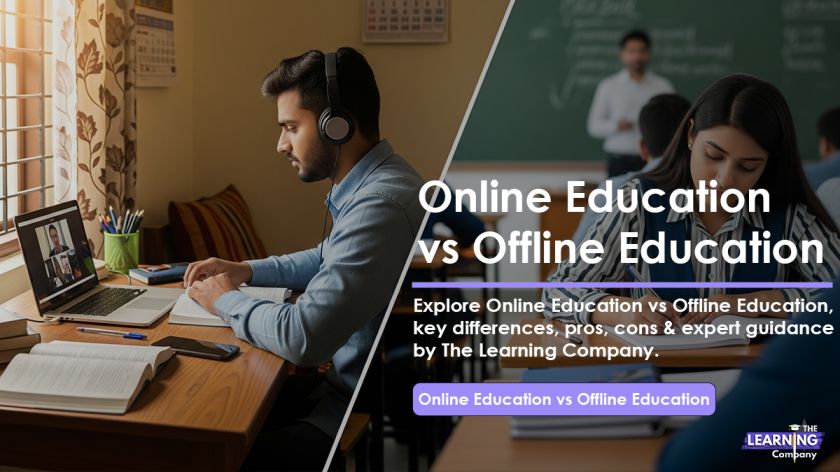
Online Education vs Offline Education: Which is Right for You?
Learning has always been the key to personal and professional growth. Whether we talk about building a career, improving skills, or gaining knowledge, learning plays a central role in shaping our lives. But in the last decade, the way we learn has changed completely. The debate of online education vs offline education is stronger than ever. While traditional classrooms have their own importance, online education has brought new possibilities that were once unimaginable. The question is — which one is better for you? In this blog, we will explore every angle of online and offline education: definitions, differences, pros and cons, real-life examples, and future trends. By the end, you’ll have a clear idea of which mode of learning fits your personal or professional goals. What is Online Education? Online education means studying through digital platforms like Zoom, Google Meet, or university portals. You don’t need to travel to a campus; instead, you can join from your home using a laptop or even a mobile phone. Examples include: A student from Delhi taking an MBA from Amity Online. A working professional from Bangalore learning data science from an international platform. A homemaker in Jaipur attending English communication classes online. The best part? Online education makes world-class universities and courses available to everyone, no matter where they live. What is Offline Education? Offline education is the traditional form of learning where teachers and students interact face-to-face in classrooms. This system has existed for centuries and is still considered the foundation of formal education. Examples include: School and college programs with daily classes. University lectures with labs, libraries, and physical exams. Training centers that require in-person attendance. Offline education is valued for its discipline, social environment, and practical exposure through labs, group projects, and extracurricular activities. Online Education vs Offline Education: Key Differences When we compare online education vs offline education, the differences go beyond just location. Here’s a detailed comparison: Flexibility and Time Management Online: Classes can be live or recorded. Students decide when and where to study. Perfect for professionals and remote learners. Offline: Timetable is fixed. Students must follow the schedule and attend classes in person. Cost and Affordability Online: No travel, hostel, or canteen expenses. Course fees are often lower. Offline: Additional expenses for accommodation, transport, and facilities. Learning Environment Online: Quiet, personal space. But requires self-discipline and focus. Offline: Structured classroom with teacher supervision, which builds routine. Social Interaction Online: Limited peer-to-peer engagement, often through chats or forums. Offline: Face-to-face discussions, group projects, and networking. Accessibility Online: Global access. A student in India can study from a US or UK university. Offline: Restricted to physical presence; not always possible for distant learners. Advantages of Online Education Flexibility: Study anytime, anywhere. Variety: Choose from global courses across fields. Cost-effective: Save money on travel, hostel, and food. Best for working professionals: Continue your job while upgrading your skills. Access to recordings: Rewatch lectures anytime. Advantages of Offline Education Face-to-face interaction: Directly clear doubts with teachers. Structured learning: Routine builds discipline and focus. Better networking: Meet peers, professors, and alumni. Campus experience: Sports, labs, cultural events, and group studies. Hands-on learning: Best for courses like medicine, engineering, and sciences. Challenges of Online Education Requires high self-discipline. Internet issues can disturb classes. Less personal bonding with teachers. Screen fatigue due to long hours online. Challenges of Offline Education Higher expenses for transport, food, and housing. Fixed schedules can be stressful. Limited access for students living far away. Less exposure to global experts compared to online learning. Online Education vs Offline Education: Which is Better for Students? For school and college students, offline education provides personality development, teamwork, and discipline. But online education helps in extra learning. For example, a student preparing for competitive exams can use online platforms for coaching while continuing school offline. The best approach is to combine both: attend school for structured learning and use online platforms for additional skills. Online Education vs Offline Education: Which is Better for Working Professionals? For professionals, flexibility is key. Online education gives them the chance to upskill without leaving their jobs. For example: A software engineer can learn cloud computing online. A marketing professional can do an online MBA. A teacher can learn advanced teaching techniques digitally. Here, The Learning Company plays a huge role by helping professionals compare different online programs from top universities. They also provide free career counselling for working professionals, which removes confusion and saves time. Hybrid Learning: The Best of Both Worlds It’s not always a fight of online education vs offline education. Many institutions are offering hybrid models — where students attend some classes online and some offline. Example: MBA programs where lectures are online but exams and workshops are offline. This model combines flexibility with personal interaction, making it a strong option for the future. Expert Advice: How to Decide Between Online and Offline Check your career goals — Do you want a degree, or just skill development? Consider your lifestyle — Do you have time for daily classes? Check your budget — Online is usually more affordable. Learning style — Do you study better alone or with a group? Course type — Practical fields (like medicine) need offline labs; skill-based fields (like data science, digital marketing) work well online. Future of Education The future is not about online education vs offline education, but about integration. Artificial intelligence, virtual classrooms, and interactive platforms are making learning more personalized and engaging. Soon, students may choose a mix: Online for global access and flexibility. Offline for practical training and networking. This balance will ensure that education becomes more inclusive and accessible worldwide. Conclusion The debate of online education vs offline education has no single winner. Both have unique strengths and weaknesses. The real choice depends on your personal needs, career goals, and circumstances. If you’re a student, offline education builds your foundation while online courses can enhance your skills. If you’re a working professional, online education is usually the smarter option to continue learning without